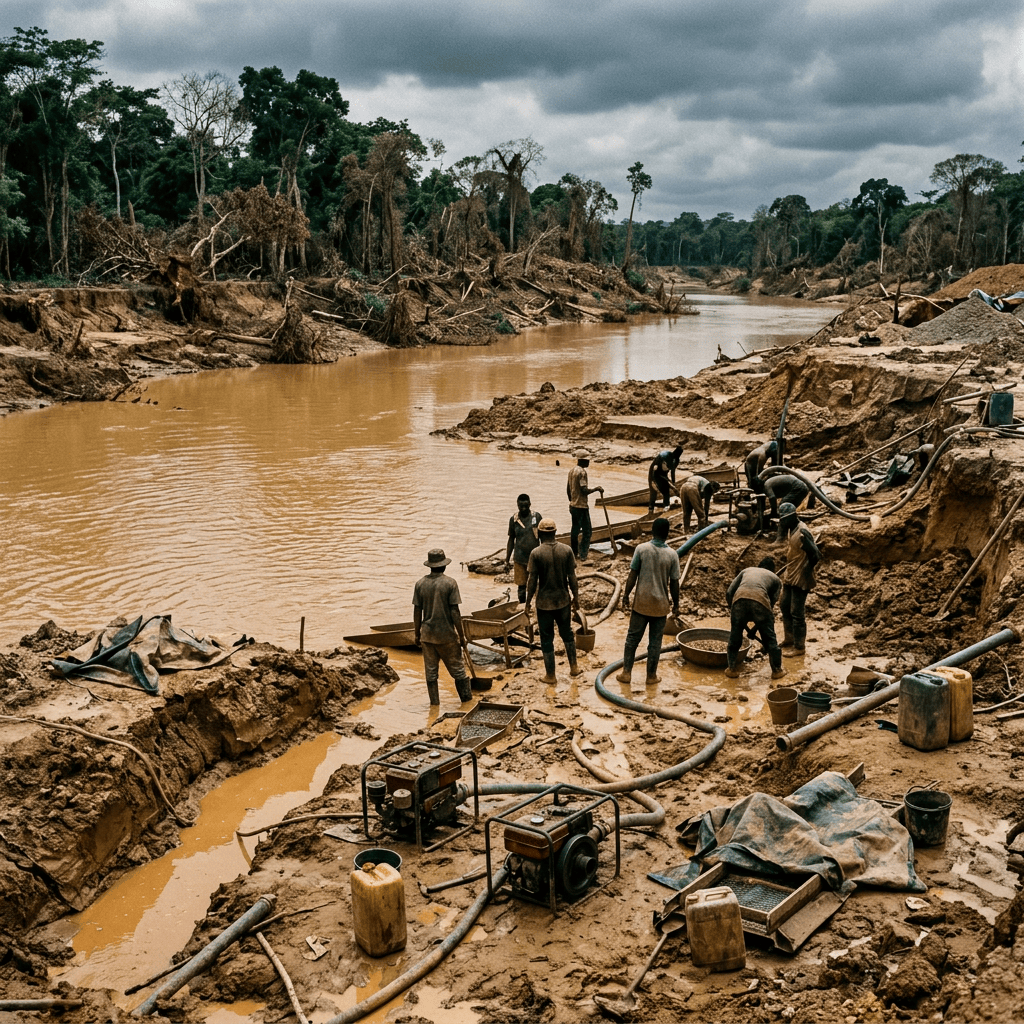
Galamsey is the term used in Ghana to refer to illegal, unregulated artisanal small-scale gold mining operations. This term is derived from the English phrase “gather them and sell,” indicative of the underlying practices associated with these operations.
Traditionally, local community members would manually excavate or pan for gold in rivers, streams, and surface soils. In contemporary times, this practice has evolved into a significant and predominantly unregulated industry, encompassing thousands of local and foreign workers, including individuals from neighboring West African nations and China, who employ heavy machinery.
Galamsey has polluted over 60% of Ghana’s fresh water bodies, rendering essential drinking sources like the Pra, Ankobra, and Birim rivers toxic and muddy due to chemical poisoning, high turbidity, and damage to water infrastructure.
Toxic Chemical Poisoning
Miners use chemicals to extract gold, causing contamination in rivers and groundwater.
- Mercury: Miners mix mercury with gold ore and burn it off, releasing mercury into water. Research shows mercury levels in contaminated rivers can be 500 times higher than the World Health Organization (WHO) safe limit. This mercury accumulates in fish and crops, causing serious health problems like neurological damage, kidney failure, and birth defects.
- Cyanide and Arsenic: Illegal operations use cyanide to extract gold, and naturally occurring arsenic poisons nearby communities that depend on rivers for drinking, cooking, and farming.
How does Galamsey in Ghana affect the whole world?
Galamsey in Ghana causes environmental damage that impacts global markets and adds to climate change.
The Global Chocolate Supply Crunch
Ghana produces nearly 20% of the world’s cocoa, acting as a foundational supplier for global chocolate giants like Mars, Nestlé, and Hershey.
- Destroyed Farmlands: Galamsey operations have harmed over 19,000 hectares of cocoa plantations as miners often take over cocoa farms to search for gold.
- Rising Global Prices: The severe drop in cocoa output has triggered massive supply deficits. This shortfall has caused global cocoa futures to spike to historic highs on international mercantile exchanges, translating directly into higher chocolate prices for consumers worldwide.
- Chemical Contamination Risks: Food safety organizations closely watch the issue, as high levels of mercury and arsenic from galamsey can contaminate the soil where cocoa trees grow.
Acceleration of Global Climate Change
Ghana contains vital segments of the West African Upper Guinean rainforest, which serves as a critical global carbon sink.
- Deforestation: Galamsey has cleared many hectares in protected forests. High global gold prices have increased tree loss.
- Loss of Carbon Sinks: Burning and clearing tropical forests releases carbon dioxide into the atmosphere and destroys biodiversity, which goes against international climate agreements like the UN Paris Agreement.
International Transboundary Pollution
The environmental damage from galamsey crosses political borders.
- Shared River Basins: Major rivers like the Tano and Bia, polluted by galamsey chemicals, flow into Côte d’Ivoire. The toxic substances disrupt water systems and ecosystems downstream, leading to regional tensions.
- Marine Pollution: Contaminated rivers flow into the Gulf of Guinea and the Atlantic Ocean, harming marine life and affecting fishing and the ocean food chain.


Leave a Reply